Reading the signs
The team identified guesswork in how owners interpret their pets' emotions.
Design intention
Make feedback interpretable.
Connected care / Collaborative concept / 2026
A closer connection.
At home, and when apart.
01 / From uncertainty
We began with international pet owners: people navigating care abroad while relying on their pets for emotional support. The research shifted our attention from adding services to making care feel more understandable.
The team identified guesswork in how owners interpret their pets' emotions.
Make feedback interpretable.
Separation can amplify uncertainty when owners cannot check their pets' state.
Support a sense of connection.
The research framed a gap between practical data and emotional reassurance.
Connect information to a response.
Images illustrate the team's concept direction, not research observations or tested outcomes. Team research synthesis, presentation pp. 3-8. Methods described: semi-structured interviews, empathy mapping and desk research. Sample size and full interview records were not supplied.
How might we help owners understand
and respond, even when apart?
02 / One connected experience
The concept links a collar, an app and the owner's response. At home, the emphasis is everyday interaction; at a distance, it is staying connected without being physically present.
Proposed experience / 01
The proposed collar and app support an exchange while the owner and pet are together. The owner can relate the interface to what they can actually observe.
Team concept scene, not a field-test photograph. The displayed dialogue illustrates the proposed interaction.
Concept relationship only. How signals could support reliable emotion interpretation has not been validated.
Experience overview reconstructed for this case study from presentation pp. 13-15 and the supplied team visuals. It is not an original detailed app-flow deliverable or a technical architecture.
03 / Making it tangible
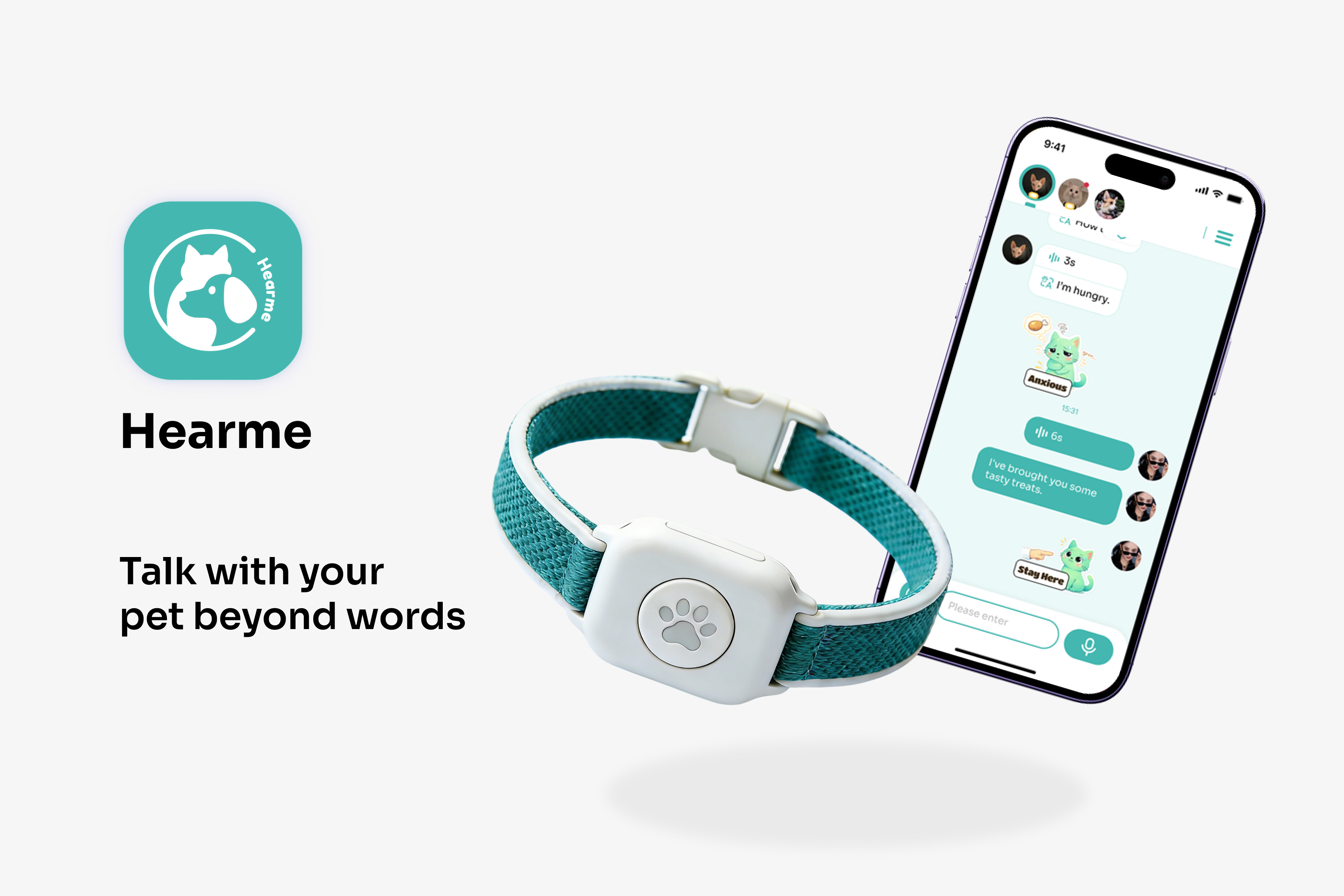
The team's visual direction brings a soft textile collar together with an approachable app. These representations communicate the concept; they do not demonstrate working hardware or emotion recognition.
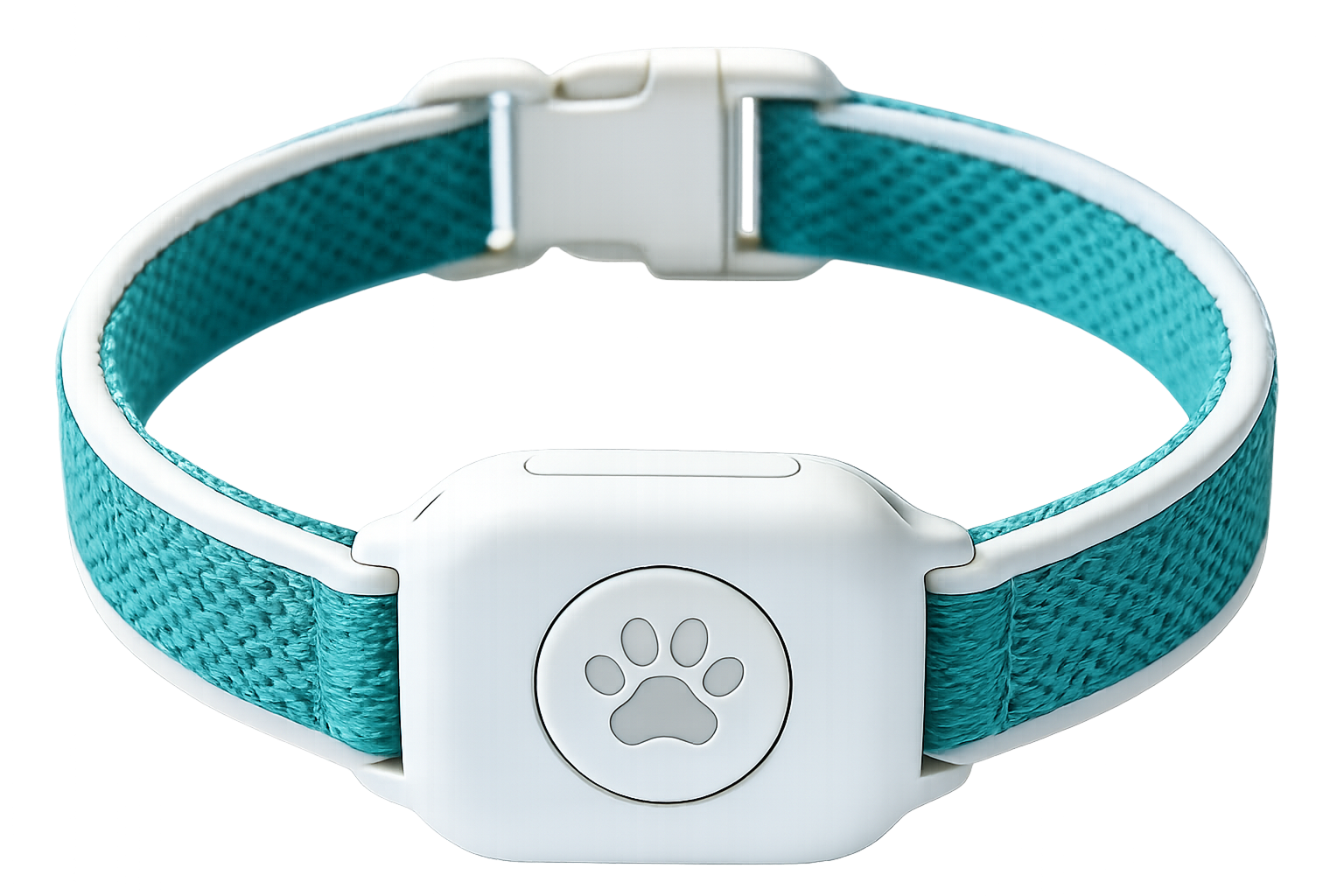
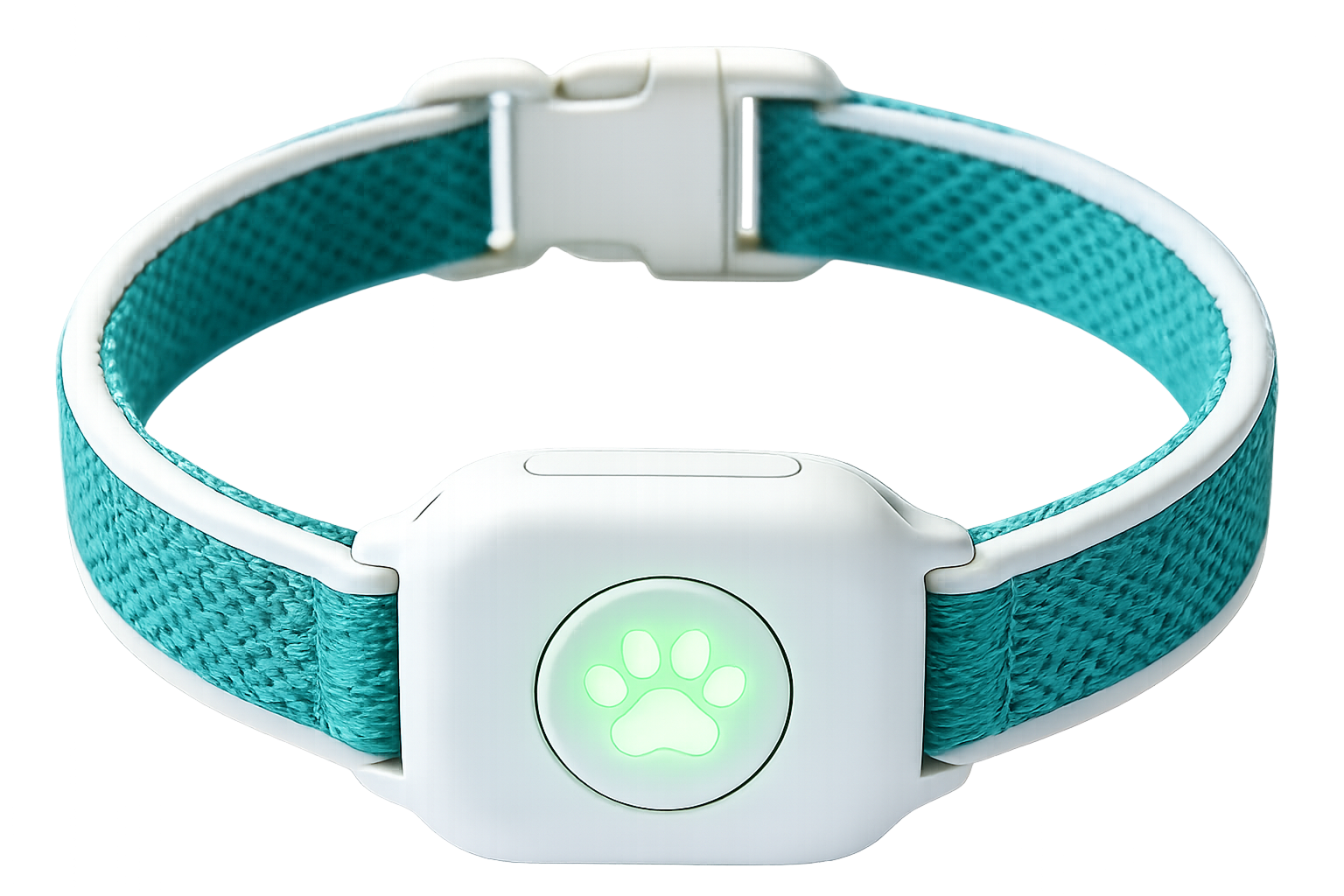
The two supplied renders explore the collar's illuminated and unlit appearance. This is a visual state study, not a working device demonstration.
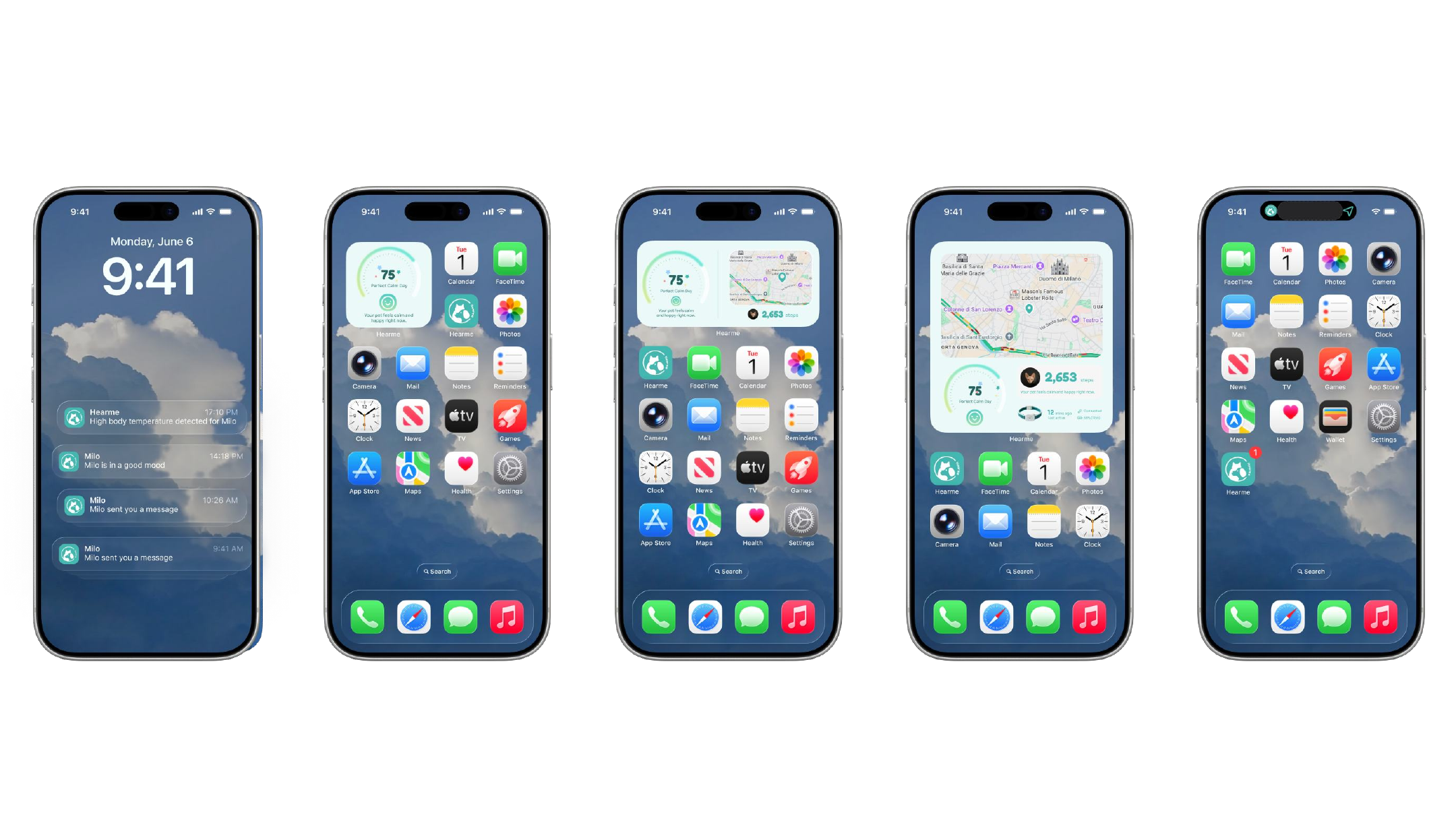
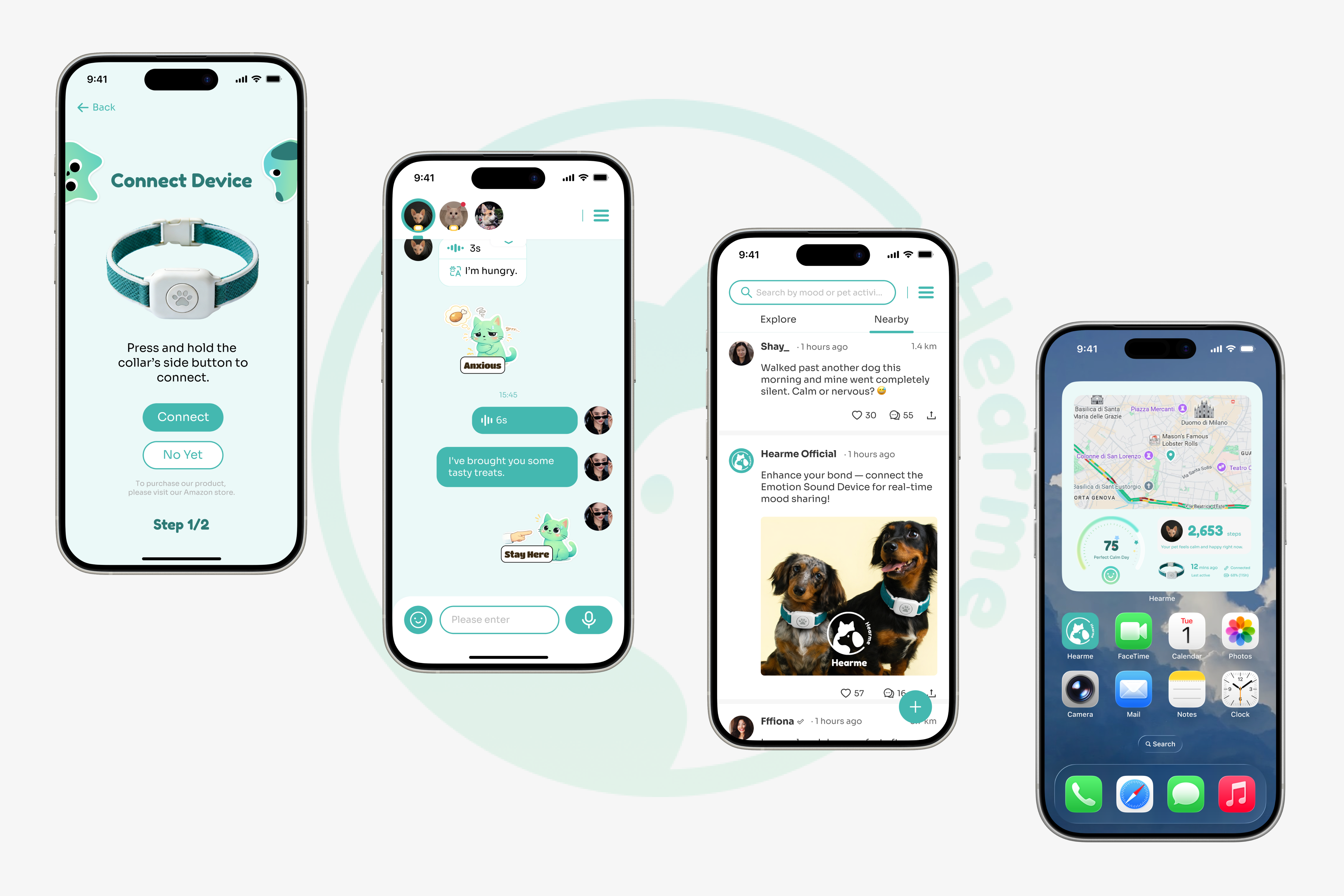
Device setup, a conversation-style interface and surrounding care touchpoints bring the proposed ecosystem into view.
Final UI prototyping was handled by other team members. My contribution focused on concept, experience structure, app flows and visual direction.
Messages such as “I'm hungry”, emotion labels and numerical mood scores are illustrative UI content, not validated readings. Health values shown in the original concepts are not clinical evidence.
Original team presentation film / 1 min 29 sec. UI and motion are team outcomes; statements about AI and pet emotions describe the proposed concept, not validated capabilities.
04 / Contribution & reflection
My contribution centred on shaping Hearme's product concept and experience structure, and helping the team move the project forward.
I contributed to user research and insight synthesis, and helped define the project goals.
I worked on the overall experience structure and app flows, connecting the concept to its use scenarios.
I contributed to visual direction and the project presentation, coordinated team progress, and communicated with our tutors.
Final UI prototyping and motion design were handled by other team members. The product imagery and interfaces shown here are team outcomes.
The next question is whether people understand the feedback without placing too much trust in it. Emotion inference, collar comfort and safety, and the effect on owners and pets all remain to be evaluated.
Project record. The supplied presentation is dated January 28, 2026 and names Xinrui Yu, Yiting Wang, Zhuolin Lan and Yihan Zhao. The creator reports submission to a UX Award competition without an award; the exact event name and entry year remain to be confirmed.
Evidence. The 27-page Hearme presentation and supplied image folder document the concept and team presentation. No functional hardware, sensing model, validation results or detailed original app-flow file were supplied.
Interpretation. Claims about emotional clarity and reassurance describe design intentions. The original concept loop includes “Pet Feels Reassured”; this case does not treat that as an observed outcome. The scenario views are editorial explanations, not live telemetry.
Before validation. Clarify what signals could support a cautious interpretation, communicate uncertainty and missing data, test usability with owners, and assess hardware and animal-welfare feasibility with appropriate specialists.